Morning Briefing: Jury Selection Begins for Federal Death Penalty Trial of White Supremacist Tops Friendly Market Mass Shooter
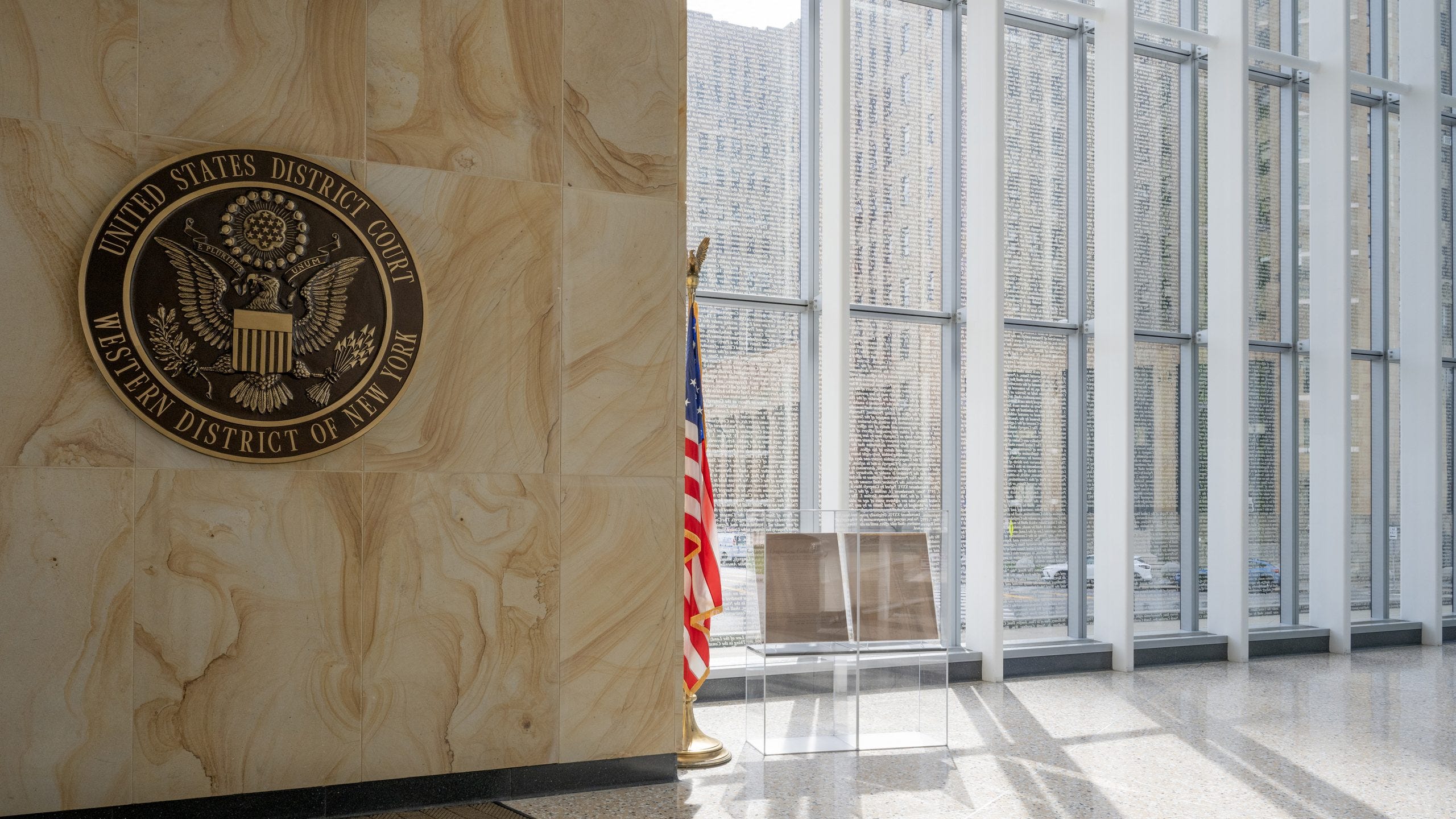
Jury selection began for the federal trial death penalty of the White Supremacist who pleaded guilty to state charges for killing 10 people at the Tops Friendly Market in Buffalo, New York.
Morning Briefing: Jury selection began for the federal trial death penalty of Payton Gendron, the White Supremacist who previously pleaded guilty to state charges for shooting and killing 10 people at the Tops Friendly Market in Buffalo, New York. Gendron is currently serving life in prison without the possibility of parole, and federal prosecutors “announced the decision to pursue the death penalty.”
For the past two weeks, potential jurors were “called in to complete an approximately two-hour-long questionnaire,” and the potential jurors were “instructed on the charges and timeline of the case.” In total, there were reportedly 1,074 potential jurors that appeared in federal court, and prosecutors and the defense “will spend the next month or so reviewing the questionnaire responses.”
Federal law enforcement arrested Joseph Baer, a civil engineering student at Florida Gulf Coast University, and Baer allegedly most posts on social media that “glorified mass shooters, promoted white supremacist ideology, displayed firearms, and advocated for violence against racial and religious minorities.”
In Germany, federal law enforcement reportedly arrested a “Romanian national suspected of planning to overthrow his country’s government,” and prosecutors alleged that the individual on conspiring to “set up a far-right terrorist group with the intention of helping to bring down the Romanian state and establish a new state based on National Socialism.”
Must Reads
Katherine Stewart writes that “Is Christian economics about loving thy neighbor, or is it about loving thy boss? From a wide historical perspective, the battle between these two versions of Christian economics seems like an eternal one. For those not practiced in the theological arts (I certainly am not), the dispute doesn’t appear to be resolvable on purely religious grounds. Who am I to say whether either of these two schools, or any of the innumerable others that claim descent from Jesus, is the authentic religion? It does, however, seem possible to judge which group is winning the day at any historical moment. And the obvious factor in deciding the battle, as ever, is money. The proslavery theologians, for example, were the undoubted victors in their heyday, and their success surely had something to do with the fact that the slaveholding class had accumulated a degree of wealth hitherto unparalleled in the U.S. political economy. The God-and-country warriors of the postwar period, on the other hand, though influential, exercised substantially less power in a period of relatively economic equality and expanding civil rights.” [The New Republic]
Marten Risius and Christopher David write that “moderation systems on social media platforms aim to remove overt extremist propaganda. These systems work imperfectly, but overt propaganda is unlikely to reach mass audiences before being removed. Instead, far-right actors often use generative AI to mask racial ideology behind seemingly benign tropes from science fiction and fantasy. This allows a ‘de-demonising’ of their ideas. Elf-like depictions of the ‘Aryan’ inhabitants of Agartha, or footage of an underground utopia, make the idea of a white ethnostate seem palatable. The engaging aesthetic keeps people watching longer. In turn, this triggers the algorithm to push the video to wider audiences. Far-right actors infuse their content with dog whistles that communicate to a certain audience without triggering moderation… This is a calculated provocation. It tests and pushes platform boundaries, normalising the presence of far-right markers and slowly desensitising viewers. At the same time, successful inclusion of forbidden symbols in videos with viral reach serves as a badge of honour within the in-group.” [The Conversation]
Ian Ward writes that “RidgeRunner’s move into the political fray comes at a uniquely precarious moment for the New Right. In Washington, the movement’s goal of reorienting the Republican Party around the cultural values and material interests of white working-class Christians is running up against the chaos and tumult of the second Trump administration. The electoral coalition that the New Right hoped would buttress its power in the coming decades has splintered over the war in Iran and the persistently high cost of living, and the movement’s allies in the Trump administration — including its leading intellectual avatar, Vice President JD Vance — are struggling to preserve the patina of intellectual coherence that they have erected around Trump’s haphazard style of governance. Yet even as the New Right project flounders in Washington, RidgeRunner is placing a bold bet: that the war can still be waged and won at the hyper-local level.” [Politico]
What to expect from Radical Reports: Morning Briefing provides a daily round-up of reporting on the Radical Right; Extremist Links offers a weekly round-up of extremists activities including the white supremacist and militia movements; Narratives of the Right delivers weekly analysis of the current narratives in far right online spaces and promoted by right-wing media; and Research Desk provides monthly highlights research and analysis from academia on the Radical Right.


